Non-Invasive Weight Loss Treatments

Highly effective non-invasive weight-loss treatments for people who want results without undergoing an operation

Procedures List

  • Gastric Balloon (non-surgical)
  • Medical weight-loss therapies (e.g., Semaglutide)

Why Choose Vivaanta?

Comprehensive care

We’ll ensure you receive the best private care and customised weight-loss plan. We offer all the latest treatment options including Gastric Balloon, Medical Weight-Loss Therapies and Semaglutide. You will get safe monitoring and long-term guidance
Trusted experts

Supervision by experienced bariatric & metabolic specialists with complete support: diet, lifestyle, follow-up

Quick Recovery

Short hospital stay — many patients go home the next day and return to routine work quickly.

Modern Facilities

Access to modern weight-loss medications, including Semaglutide.

Evaluation

Assessment

Your weight loss journey starts with an assessment. This visit allows our team to review your overall health and see if you’re a good candidate for non-invasive weight loss treatments.

What are non-invasive weight loss treatments?

At Vivanta Advanced Laparoscopy & Bariatric Centre, we offer some of the latest, safest, and highly effective non-invasive weight-loss treatments for people who want results without undergoing an operation.

Treatment Options

At Vivaanta

We offer several non-surgical options. Your surgeon will help you choose the best one for your needs.

What is intragastric balloon?

Intragastric balloon

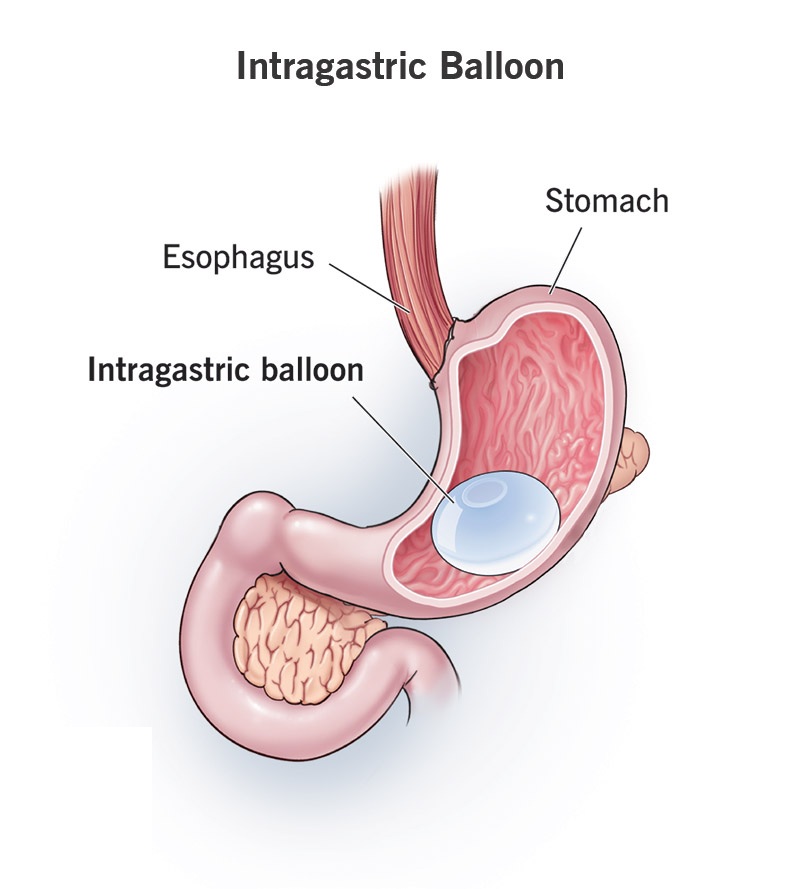
The intragastric balloon system is a minimally invasive medical weight loss program for people with obesity. It combines long-term diet and lifestyle changes with a short-term medical implant. The implant is an inflatable balloon that a healthcare provider places nonsurgically inside your stomach (which is what “intragastric” means). It works by taking up space, making you feel full and restricting how much you can eat at one time.

Why is this treatment needed?

When you have obesity, your body changes in ways that make it increasingly hard to lose weight by diet and exercise alone. One of those changes is that the volume of your stomach expands over time. As your stomach stretches, it holds more food and takes longer for you to feel full, which leads to eating more. This is why all medical weight loss procedures restrict the capacity of your stomach by some means.

The intragastric balloon offers an important alternative to the other available procedures. First, it’s the only procedure that’s designed to be impermanent. Second, it doesn’t require surgery to install it. It doesn’t require general anesthesia, either. This makes it a viable option for those who either don’t meet the qualifications for bariatric surgery or are looking for a lesser commitment.

Who is intragastric balloon therapy for?

People whose obesity makes surgery unsafe for them may use the balloon as a bridge procedure to lose enough weight to qualify for surgery. Others may choose it as a less invasive option to jump-start their weight loss journey. The intragastric balloon is typically recommended for people with a BMI of 30 to 40 who have not been able to lose weight through diet and exercise alone.

How much weight can you lose with a gastric balloon?

Average weight loss with the gastric balloon is about 10% of your total weight or about 30% of your excess weight. That’s enough to make a life-changing impact on your health in a short period. As with any weight loss system, you can lose more or less depending on how well you stick to the program. You can also regain the weight you lost if you don’t stick to the program after the balloon is removed.

Who shouldn’t have the gastric balloon?

We may not advise it if you have:

  • Peptic ulcer disease.
  • Hiatal hernia.
  • A blood clotting disorder.
  • Liver disease.
  • Substance use disorder.
  • Previous gastric or esophageal surgery.

What happens during the intragastric balloon procedure?

  • You’ll have medication to help relax you and numb your throat for the endoscope. Your gastroenterologist or endoscopic surgeon will begin by examining your esophagus and stomach with the endoscope, which projects images onto a screen. Once they’re satisfied that you don’t have any conditions that could make the balloon unsafe, they’ll guide the balloon into place.
  • The balloon is folded up tightly to fit down the endoscope. Once it’s in your stomach, your provider will fill it with sterile saline solution through a small filling tube attached to the balloon. When the balloon is full, they’ll remove the filling tube, leaving the balloon floating freely in your stomach.
  • Finally, your provider will withdraw the endoscope and you’ll be taken to a recovery area to rest until the sedation wears off.

How long does a intragastric balloon procedure take?

The procedure takes about 20 to 30 minutes Afterward, you’ll spend a few hours recovering in the hospital. You’ll have IV fluids and medication to prevent pain and nausea. Your healthcare team will make sure you’re tolerating the balloon before they discharge you.

They’ll also leave you with dietary instructions to follow in the weeks ahead. You’ll stay on a clear liquid diet for the rest of the day.

How long does an intragastric balloon last?

The Orbera balloon stays in place for six months. During this time, you’ll continue to work with your team to make the diet and lifestyle changes that will sustain your weight loss over the long term. You’ll eat less, lose weight and retrain yourself to notice when you’re getting full. You’ll continue acid-blocking and anti-nausea medications as needed. The greatest weight loss happens in the first three months

What happens when the balloon comes out?

You’ll have a second endoscopic procedure to remove the balloon. You’ll be given a sedative and a topical anesthetic or lubricant in your throat to ease the removal. Your endoscopist will puncture the balloon, suction out its filling and then withdraw the deflated balloon. After the balloon comes out, your team will continue to work with you for six more months to reinforce your long-term lifestyle changes.

What are the side effects of intragastric balloon procedure?

Side effects of mild gastrointestinal symptoms are common, and healthcare providers often prescribe medication to prevent or manage them. Symptoms usually only last a week or so, but sometimes longer.

They include:

  • Temporary abdominal pain.
  • Temporary sore throat.
  • Indegestion.
  • Nausea and vomiting.
  • Acid reflux.
  • Constipation.

What is the long-term outlook with the intragastric balloon?

Most people lose a significant amount of weight with the intragastric balloon, enough to experience relief from many of the physical and psychological complaints that can come with obesity. The average weight loss of 10% is more than most people can achieve through lifestyle interventions alone. This experience can be a revelation that motivates people to maintain or continue their weight loss.

But the procedure itself isn’t permanent, and there’s nothing to stop you from regaining the weight after completing the program. Current studies suggest that only a minority of people maintain their weight loss from the intragastric balloon over five years. Some people have repeat procedures with the balloon, and others follow up with medications or weight loss surgery for a longer-term solution.

Key Features

  • Gastric Balloon (non-surgical)
  • Medical weight-loss therapies
  • Semaglutide injections
  • Diet and lifestyle support